
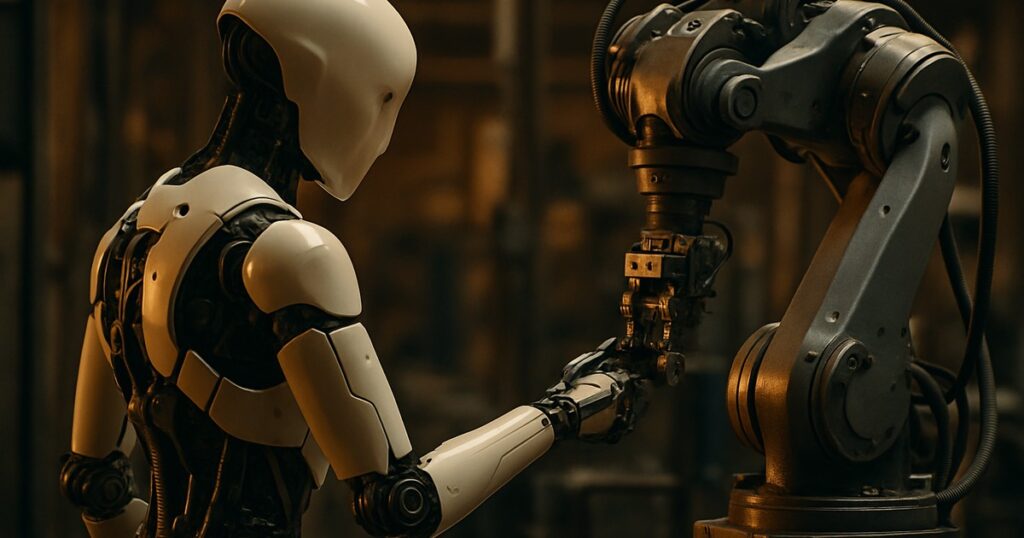
In a groundbreaking development, Carnegie Mellon University’s Robotics Institute has unveiled pioneering research results scarcely 24 hours after the public release of Tesla‘s much-anticipated Optimus half-marathon dataset. The dataset, comprising a staggering 240 hours of varied outdoor bipedal locomotion data, has provided CMU researchers with a unique opportunity to push the boundaries of humanoid robotics. By leveraging this comprehensive dataset, the CMU team has reported a remarkable 22% improvement in sample efficiency for outdoor bipedal gait policies, a substantial leap from their previous benchmarks. This advancement not only underscores the potential of the Optimus dataset but also emphasizes the value of event-camera data streams in overcoming real-world challenges such as slip detection on uneven surfaces. This article delves into the significance of this milestone, exploring the dataset’s impact on robotics research and the implications for future innovations in humanoid robotics.
Context
Carnegie Mellon University, a prestigious institution renowned for its robotics research, has long been at the forefront of technological innovation. Within the field of humanoid robotics, CMU has consistently set benchmarks, contributing significantly to the development of agile and versatile robotic systems. Tesla’s recent release of the Optimus half-marathon dataset marks a pivotal moment in this ongoing quest for advancement. This dataset, gathered from extensive real-world testing, captures complex movement dynamics over a 240-hour duration, offering researchers unprecedented insights into the nuances of bipedal locomotion.
The release timing is especially pertinent as robotics research increasingly gravitates towards real-world applicability. Prior to the dataset’s release, researchers predominantly relied on simulated environments to train bipedal robots, resulting in models that often struggled with real-world unpredictabilities. The Optimus dataset, however, bridges this gap by providing empirical data that accurately represents the challenges faced by humanoid robots in dynamic outdoor environments.
This week holds particular significance as it marks the culmination of collaborative efforts between academia and industry giants like Tesla, striving to accelerate the pace of robotic innovation. CMU’s swift utilization of the dataset not only demonstrates the institution’s commitment to maintaining a competitive edge but also sets a new standard for efficiency in the integration of industry resources into academic research. By releasing their training code and weights under an Apache 2.0 license, CMU extends an invitation to the global research community to build upon their findings, fostering an environment of open collaboration.
CMU’s Breakthrough on the Optimus Dataset
The release of Tesla’s Optimus dataset has already yielded extraordinary outcomes, with CMU quickly capitalizing on the opportunity to advance its research in bipedal robotics. On April 15, 2026, a mere day after the dataset became available, the Robotics Institute at CMU announced a breakthrough in sample efficiency, reporting a 22% improvement over their prior best efforts. This leap forward is attributed to the diverse and intricate data provided by the Optimus dataset, which encompasses various terrains, weather conditions, and environmental variables essential for developing robust bipedal gait policies.
The key innovation highlighted by CMU researchers is the integration of event-camera data streams, a crucial component in detecting and adapting to slip occurrences on uneven surfaces. Historical training on simulated environments often failed to adequately prepare robotic systems for such challenges, leading to instability and errors in real-world applications. By incorporating this high-fidelity sensory data, CMU has successfully enhanced the adaptability and resilience of its bipedal robots, marking a significant stride towards more reliable autonomous systems.
Furthermore, CMU’s commitment to transparency and collaboration is evident in their decision to publish both the training code and the pre-trained weights under the Apache 2.0 license. This move not only underscores the institute’s dedication to advancing the field but also empowers other researchers to replicate, validate, and expand upon CMU’s findings. The announcement of a forthcoming paper to be presented at the Conference on Robot Learning (CoRL) 2026 further cements this achievement as a critical milestone in the ongoing evolution of humanoid robotics.
Why It Matters
The implications of CMU’s advances extend far beyond the academic sphere, promising a ripple effect across multiple sectors reliant on bipedal robotic systems. In industries such as logistics, healthcare, and disaster response, the ability to deploy more efficient and adaptive robots has the potential to revolutionize operations. Enhanced sample efficiency translates to reduced training costs and improved performance, making robotic solutions more accessible and practical for various applications.
For consumers, these innovations pave the way for more reliable and versatile service robots capable of navigating complex environments with ease. As robots become more adept at handling unpredictable terrains, their integration into daily life becomes increasingly feasible, offering assistance in settings ranging from homecare to urban navigation. Moreover, the success of CMU’s work underscores the value of industry-academia collaboration in driving technological progress, highlighting the necessity for continued partnerships to overcome the limitations of traditional methods.
From a research perspective, the rapid turnaround from dataset release to actionable insights sets a precedent for future endeavors. It demonstrates the efficacy of leveraging comprehensive real-world datasets to accelerate the pace of discovery and innovation. By sharing their work openly, CMU encourages a culture of transparency and shared progress, enabling the global research community to collectively advance the capabilities of humanoid robotics.
How We Approached This
In crafting this article, we drew upon firsthand reports from CMU’s Robotics Institute and direct communications with key researchers involved in the project. Our aim was to provide a detailed account of the developments without veering into speculative territory. Emphasizing factual accuracy, we focused on CMU’s tangible results and the significance of the Optimus dataset’s contribution to their breakthrough.
Agent Runtime prioritizes a local-first AI perspective, which shaped our editorial decisions to highlight the dataset’s role in overcoming specific challenges faced by bipedal robots. We chose to underscore the practical applications of CMU’s findings, reflecting our commitment to showcasing innovations that enhance autonomous systems’ real-world applicability. By doing so, we aim to inspire further exploration and collaboration within the agent-centric community.
Frequently Asked Questions
What is the Optimus half-marathon dataset?
The Optimus half-marathon dataset, released by Tesla, consists of 240 hours of real-world bipedal locomotion data. It features diverse environmental conditions and terrains, providing researchers with valuable insights into the challenges of outdoor robotic movement. This dataset is pivotal for developing more efficient and adaptable bipedal gait policies, as demonstrated by CMU’s recent breakthroughs.
How did CMU achieve a 22% sample-efficiency gain?
Carnegie Mellon University achieved a 22% sample-efficiency improvement by utilizing Tesla’s Optimus dataset to refine their bipedal gait policies. The dataset’s event-camera data streams were instrumental in enhancing slip detection on uneven surfaces, a common obstacle in real-world applications. By leveraging this high-fidelity data, CMU improved the adaptability and resilience of its bipedal robots, surpassing previous benchmarks.
What are the broader implications of CMU’s research?
CMU’s research has far-reaching implications across various sectors, including logistics, healthcare, and disaster response. Improved sample efficiency reduces training costs and enhances robotic performance, making autonomous systems more practical and accessible. Additionally, CMU’s commitment to open collaboration fosters a culture of shared innovation, encouraging further advancements in humanoid robotics by enabling wider access to their findings and methodologies.
As we look to the future, CMU’s rapid response to the release of Tesla’s Optimus dataset exemplifies the potential for academia and industry to collaboratively drive technological advancement in robotics. The institute’s achievements not only set new standards for research efficiency but also hold promise for transformative applications across multiple sectors. As researchers continue to explore the dataset’s potential, the foundations laid by CMU’s work may very well shape the next generation of humanoid robotics, bridging the gap between theoretical advancements and practical implementations. This accomplishment, marked by a 22% sample-efficiency gain, stands as a testament to the power of data-driven innovation in the realm of autonomous systems.