In an eagerly anticipated move coinciding with National Robotics Week 2026, NVIDIA has revealed its Physical AI Data Factory Blueprint—a groundbreaking open reference architecture designed to streamline the complex processes involved in training physical AI systems. By unifying the phases of data generation, augmentation, and evaluation, this blueprint presents a potentially revolutionary leap in the efficiency and scalability of robotics training. Utilizing NVIDIA’s Omniverse for synthetic scene generation and integrating with their Isaac GR00T platform, the blueprint purports to slash both the cost and time of training robotics models by an impressive factor of 5 to 10 times compared to traditional manual data collection methods. This strategic release addresses pivotal use cases in humanoid locomotion, warehouse operations, and autonomous vehicle perception, marking a significant advancement in AI-driven robotics innovation.
Context
In recent years, the field of artificial intelligence has seen exponential growth, particularly within the realm of physical AI systems where robotics training plays a critical role. However, training these systems has traditionally been hampered by the arduous processes of manual data collection and analysis, which are both time-consuming and costly. NVIDIA, known for its pioneering contributions to AI and graphics processing, has taken a front-seat role in addressing these bottlenecks with its newly announced Physical AI Data Factory Blueprint. This initiative is not just timely but transformative, poised to redefine how data is handled in the training of complex robotic systems.
The blueprint emerges from NVIDIA’s broader strategy to leverage its powerful technological ecosystem, which includes the NVIDIA Omniverse and Isaac GR00T. By integrating these platforms, the blueprint offers a seamless pipeline for synthetic scene generation, sim-to-real domain randomization, and automated data scoring, all essential for accelerating the deployment of efficient and adaptable physical AI systems. This comprehensive approach aligns with the current industry push towards reducing the latency and expense associated with robotic training, particularly as demand for more intelligent automated systems grows across various sectors.
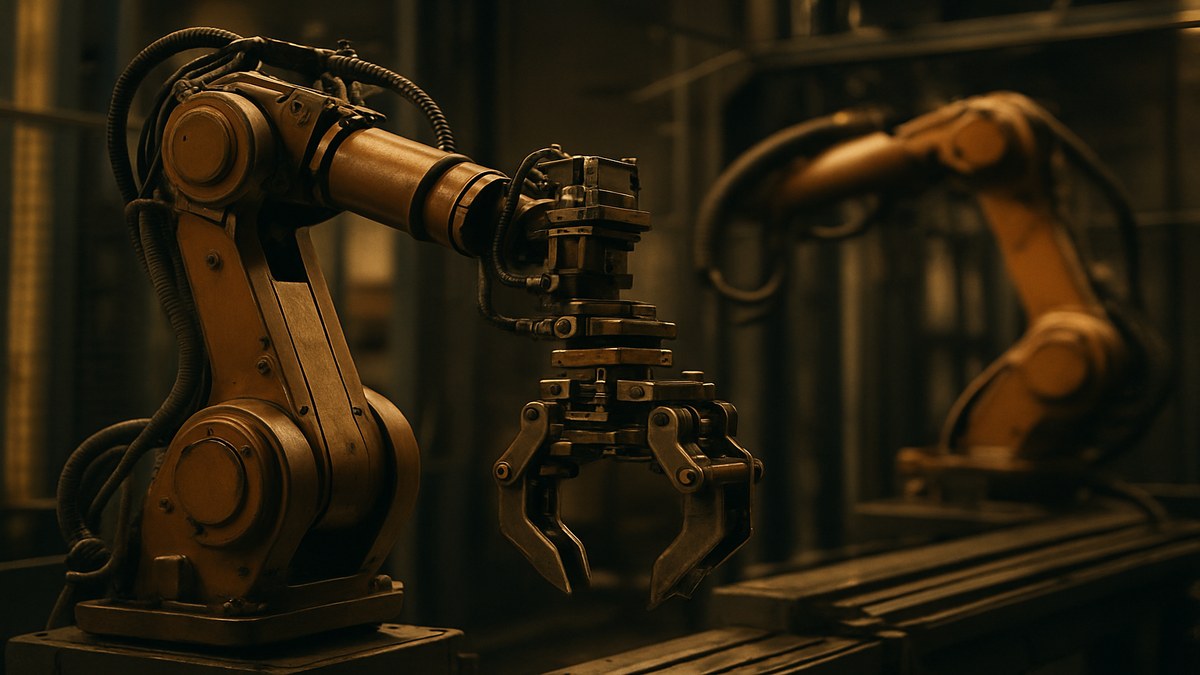
The timing of this announcement coinciding with National Robotics Week amplifies its impact, drawing attention from a global audience of AI researchers, developers, and industry leaders. This week-long celebration of robotics innovation underscores the importance of cutting-edge developments like NVIDIA’s blueprint, which promises to catalyze further advancements in the field. By targeting key areas such as humanoid locomotion, warehouse automation, and autonomous vehicle perception, NVIDIA is positioning itself at the forefront of solving some of the most challenging problems in robotics today.
What Happened
This week, NVIDIA announced its Physical AI Data Factory Blueprint, a comprehensive open reference architecture aimed at revolutionizing the training of physical AI systems. This blueprint outlines a robust and scalable approach to handling training data, significantly optimizing the processes involved. Central to this blueprint is the use of NVIDIA’s Omniverse for generating synthetic scenes, which allows for the creation of diverse and complex environments that simulate real-world scenarios. These synthetic scenes are crucial for effective domain randomization, a technique that enhances the transferability of models from simulated to real-world applications.
Furthermore, the blueprint incorporates automated data quality scoring, a crucial feature that ensures only high-quality data is used in training. This automation reduces the risk of biases and errors, leading to more reliable and accurate models. The integration with NVIDIA Isaac GR00T allows for the training of sophisticated vision-language-action models, which are essential for the nuanced tasks demanded by robotics applications. NVIDIA claims that this entire process can reduce the cost and time required for training robotics models by a factor of 5 to 10 times compared to traditional methods.
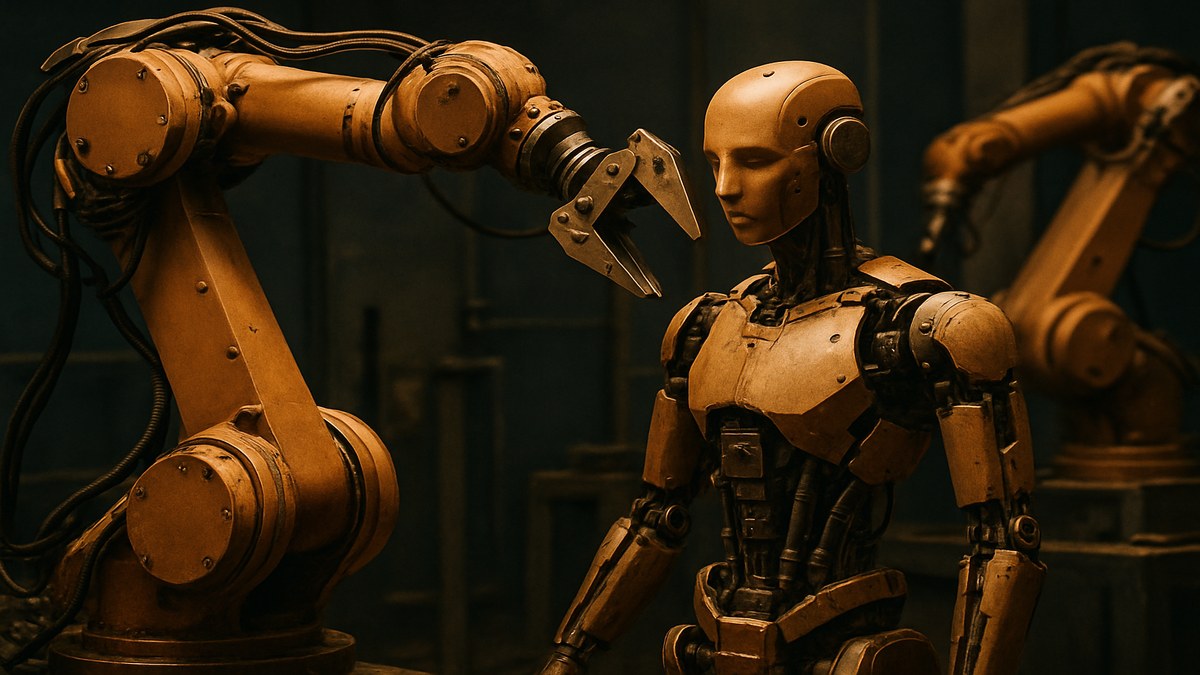
A notable early adopter of this blueprint is Maximo, a solar robotics company incubated within AES Corporation. Maximo successfully utilized the blueprint to train a fleet of robots that were instrumental in the completion of a 100-megawatt solar installation. This real-world application not only validates the blueprint’s efficacy but also demonstrates its potential to transform industry practices. By streamlining the training process and enhancing model performance, NVIDIA’s blueprint is poised to set a new standard in robotics training methodologies.
Why It Matters
The introduction of NVIDIA’s Physical AI Data Factory Blueprint carries significant implications for the robotics industry and beyond. One of the most immediate benefits is the reduction in time and cost associated with training robotics models. This improvement could democratize access to advanced AI technologies, allowing smaller companies and research institutions to compete more effectively with industry giants. By lowering the barriers to entry, NVIDIA’s blueprint could spur innovation across a wider range of industries, from manufacturing to healthcare.
Moreover, the blueprint’s emphasis on high-quality data and robust model training has the potential to enhance the reliability and efficiency of robotic systems. As robots are increasingly integrated into critical applications—such as healthcare, where precision and reliability are paramount—the ability to train models quickly and accurately becomes even more crucial. NVIDIA’s blueprint provides a scalable solution that could lead to safer and more effective robotic systems, ultimately benefiting consumers and end-users.
On a broader scale, NVIDIA’s initiative highlights the growing importance of open architectures in the AI landscape. By providing a reference architecture that is accessible to all, NVIDIA is fostering collaboration and innovation among researchers and developers. This approach not only accelerates technological progress but also ensures that advancements in AI and robotics are shared more equitably across the globe. As the demand for intelligent automation continues to rise, NVIDIA’s blueprint could play a pivotal role in shaping the future of AI-driven innovation.
How We Approached This
In developing this feature, we at Agent Runtime focused on the impact and implications of NVIDIA’s Physical AI Data Factory Blueprint within the context of the OpenClaw ecosystem. Our editorial approach emphasized the blueprint’s potential to revolutionize the training processes for physical AI systems, aligning with our commitment to agent-centric and local-first AI perspectives. We prioritized insights into the blueprint’s core components and its applications in real-world scenarios, such as Maximo’s solar installation project.
Our research involved analyzing NVIDIA’s official announcements, industry responses, and expert analyses to provide a comprehensive overview of the blueprint’s capabilities and potential impact. We chose to highlight the blueprint’s role in reducing training costs and time, as well as its contribution to advancing open architectures in AI. By focusing on these aspects, our aim was to offer a detailed and insightful analysis that resonates with our audience of AI researchers, developers, and enthusiasts.
Frequently Asked Questions
What is the Physical AI Data Factory Blueprint?
The Physical AI Data Factory Blueprint is an open reference architecture developed by NVIDIA, designed to optimize the processes of generating, augmenting, and evaluating training data for physical AI systems. It leverages NVIDIA’s Omniverse and Isaac GR00T platforms to create a scalable and efficient pipeline, reducing training time and costs by up to 10 times compared to traditional methods.
How does the blueprint benefit the robotics industry?
By streamlining the training process, the blueprint reduces costs and time while enhancing the quality of robotic models. This democratizes access to advanced AI technologies, enabling more companies to innovate and compete. Additionally, it provides a robust framework for training reliable and efficient robotic systems, particularly in critical applications like healthcare and autonomous vehicles.
Who has used the blueprint successfully?
Maximo, a solar robotics company incubated within AES Corporation, successfully used NVIDIA’s blueprint to train robots for a 100-megawatt solar installation. This application not only validates the blueprint’s effectiveness but also showcases its potential to transform industry practices, setting a new standard in robotics training methodologies.
Looking ahead, the release of NVIDIA’s Physical AI Data Factory Blueprint marks a significant milestone in the evolution of AI-driven robotics. As the blueprint gains traction, it is expected to usher in a new era of innovation and efficiency, reducing the barriers to entry and fostering a more inclusive AI ecosystem. For researchers, developers, and industry leaders, understanding and leveraging this blueprint could be key to unlocking the full potential of physical AI systems in the years to come.