This week, Beijing E-Town took a significant step forward in the realm of robotics and artificial intelligence, hosting the first-ever midnight dry run for its 2026 humanoid robot half-marathon. Scheduled for April 19, this event is set to test the limits of endurance and autonomous navigation for over 300 robots from 26 different brands, all vying to prove their mettle alongside human participants. Organizers have branded it the largest endurance-autonomy test of its kind, a pivotal moment in showcasing how humanoid robots can navigate real-world challenges including pavement cracks, sloped curbs, and the unpredictable lighting of the urban nightscape. This year, the goal is ambitious: over one hundred robotic finishers, a marked improvement from the handful that completed the course in the previous year. Through careful planning and technological innovation, the event aims to demonstrate the progress made in autonomous navigation and robotics technology, ultimately pushing the boundaries of what these machines can achieve in a human-centric world.
Context
Beijing E-Town, a focal point for China’s technological and industrial developments, has become a leader in robotics innovation. The humanoid robot half-marathon, an annual event, is a testament to its commitment to advancing robotic capabilities. In previous years, the event has served as a litmus test for the current state of robotic endurance and navigation, highlighting both the achievements and limitations of present-day technology. The marathon is not just a race; it is a stage that brings together leading AI and robotics firms and enthusiasts from around the globe, each eager to showcase their advancements and learn from others.
The setting for the marathon, the bustling urban landscape of Beijing, offers a uniquely challenging environment for participants. The racecourse, which features a variety of terrains and obstacles, is designed to mimic real-world conditions that robots would encounter outside the controlled environments of laboratories. This includes everything from uneven pavements and inclement weather conditions to interactions with human runners and unexpected environmental changes. The choice of a midnight run adds an additional layer of complexity, simulating low-light conditions that are crucial for testing sensor accuracy and autonomous decision-making capabilities of these humanoid robots.
This week’s midnight dry run was not just a preparatory exercise but also a critical opportunity to gather data and refine strategies ahead of the official event. The dry run enables developers to assess the performance of their robots in conditions that closely mirror the real race. As such, it acts as both a dress rehearsal and a valuable learning opportunity that allows teams to identify potential issues and make necessary adjustments. This year, with more than 300 robots scheduled to participate, the stakes are higher, and the anticipation is palpable. The advancements witnessed in this dry run will set the stage for the main event, pushing the envelope of what is possible in humanoid robotics.
What Happened
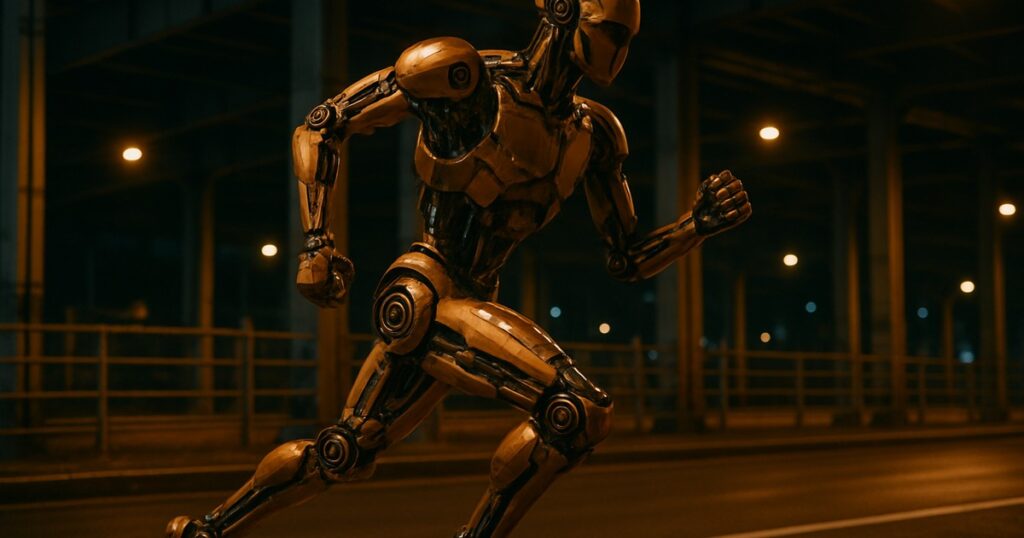
At precisely midnight on a crisp, starry night, the inaugural dry run for the 2026 humanoid robot half-marathon commenced in Beijing E-Town. The atmosphere was charged with excitement and anticipation, as over 300 humanoid robots from 26 different brands lined up at the starting point. Each robot, equipped with the latest in AI and sensor technology, represented the cutting-edge of autonomous robotics. The course, a grueling 21.1 kilometers, was designed to push these machines to their limits, testing both their physical endurance and their ability to autonomously navigate complex environments.
During the dry run, the robots faced an array of challenges designed to simulate the real-world difficulties they would encounter in an urban setting. The course was intentionally laden with obstacles such as pavement cracks, sloped curbs, and unpredictable lighting conditions. In addition, the robots had to contend with the presence of human runners, requiring them to adjust their paths and speeds dynamically to avoid collisions and maintain a smooth running pace. The dry run provided invaluable insights into the robots’ abilities to handle these challenges, with many demonstrating significant improvements in navigation and decision-making capabilities compared to previous iterations.
An official from the organizing committee, Li Wei, remarked, “The progress we have witnessed in just a year is remarkable. Last year, only a few robots managed to complete the course. This year, we are aiming for over a hundred finishers, and I believe we are on track to achieve that goal.” The dry run was closely monitored by teams of engineers and developers, who meticulously recorded data on the performance of their robots. This data will be crucial in making final adjustments and improvements before the official race day. The event also drew attention from media and industry experts worldwide, underscoring the growing importance of autonomous robotics in modern society.
Why It Matters
The humanoid robot half-marathon in Beijing E-Town represents more than just an endurance test; it is a symbol of the rapid advancements being made in the field of robotics and AI. As robots become increasingly integrated into everyday life, their ability to navigate and interact with complex environments autonomously is becoming a crucial area of development. This event serves as a proving ground for technologies that will one day be commonplace in industries ranging from logistics and transportation to personal assistance and healthcare.
The implications of these advancements extend beyond the robotics industry itself. For consumers, improved autonomy in robots could mean more efficient delivery services, enhanced security systems, and personalized healthcare solutions. From an industrial perspective, the ability of robots to operate autonomously in challenging environments could lead to significant cost savings and increased efficiency in sectors such as manufacturing and supply chain management. Furthermore, the insights gained from events like the humanoid robot half-marathon are invaluable for ongoing research and development efforts, driving innovation and spurring further advancements in the field.
Policy makers are also taking note of these developments, as the integration of autonomous robots into society raises important questions about regulation, safety, and ethics. The data and experiences garnered from this event will contribute to the ongoing discourse surrounding the role of AI and robotics in society, helping to shape future regulations and standards. As we look to the future, the success of the Beijing E-Town humanoid robot half-marathon could serve as a catalyst for even greater advancements, paving the way for a world where humans and robots coexist and collaborate more seamlessly than ever before.
How We Approached This
Our approach to covering the Beijing E-Town humanoid robot half-marathon was guided by a commitment to providing thorough and insightful analysis from an agent-centric perspective. We focused on examining how the event reflects broader trends in the robotics industry and what it means for the future of AI integration in society. Our research involved a combination of primary sources, including official statements from the organizing committee, and secondary sources, such as expert analyses and industry reports.
In crafting this article, we emphasized the significance of the technological advancements demonstrated during the midnight dry run and their potential impacts on various sectors. We chose to highlight the challenges faced by the robots and their remarkable progress, illustrating the dynamic nature of the field and its far-reaching implications. Our editorial lens remains focused on how such developments align with the broader goals of the OpenClaw ecosystem, which seeks to foster an open, collaborative approach to AI development and deployment across diverse environments.
Frequently Asked Questions
What is the purpose of the humanoid robot half-marathon?
The humanoid robot half-marathon aims to test the endurance and autonomous navigation capabilities of humanoid robots in a real-world urban environment. It serves as a platform for showcasing advancements in robotics technology, providing valuable insights for developers and enhancing the integration of autonomous robots into everyday life.
How do the robots navigate the course?
The robots use advanced AI algorithms and sensor technologies to navigate the course. These systems allow them to detect and respond to various obstacles, such as pavement cracks and changing lighting conditions, while also adjusting their paths and speeds dynamically in the presence of human runners.
What impact could this event have on the future of robotics?
The event highlights the rapid progress in autonomous robotics and its potential applications across various industries. Insights gained from the marathon could lead to improvements in robotic systems used in logistics, healthcare, and manufacturing, as well as inform policy discussions about the safe and ethical integration of autonomous robots into society.
As the countdown to the official race day on April 19 continues, the 2026 humanoid robot half-marathon is poised to become a landmark event in the field of robotics and AI. With more than 300 robots set to compete, the advancements on display will undoubtedly influence the future trajectory of autonomous technologies. The midnight dry run has already demonstrated significant progress, setting the stage for a successful event that will push the boundaries of what is possible in humanoid robotics. The world will be watching as Beijing E-Town leads the charge in navigating this bold new frontier.