In a groundbreaking partnership that could redefine the landscape of humanoid robotics, Boston Dynamics and Google DeepMind have joined forces to integrate the Gemini Robotics foundation model into the new electric Atlas humanoid. This announcement, made during the CES 2026, marks a significant shift in how humanoid robots are deployed and trained. By embedding Gemini Robotics directly into Atlas, Boston Dynamics is targeting one of the most challenging aspects of humanoid robot deployment: the ability to learn and replicate new tasks across an entire fleet without the need for custom engineering. Through this integration, an operator can demonstrate a task, such as loading a tray or tending to a CNC machine, just once. The skill is then propagated across every Atlas unit within minutes through Boston Dynamics’ central orchestrator. This article will explore how this partnership is set to impact the agent-runtime market, the technical advancements of the new Atlas, and the broader implications for the robotics industry.
Context
The collaboration between Boston Dynamics and Google DeepMind is not just a union of two tech giants; it is a strategic alignment poised to address longstanding challenges in the robotics industry. Boston Dynamics, known for its groundbreaking work in robotics, has been at the forefront of developing humanoid robots capable of performing complex tasks. Meanwhile, Google DeepMind has established itself as a leader in artificial intelligence research, particularly in the development of foundation models. By combining their expertise, these companies aim to overcome the traditional limitations faced by humanoid robots, which often required significant custom engineering to learn and perform new tasks. This partnership builds on previous collaborations, where advancements in AI and robotics have gradually been merging, but this is the first time a foundation model is being commercially deployed at scale within a humanoid robot.
The significance of this timing cannot be overstated. As the global robotics market continues to expand, the demand for intelligent humanoid robots that can seamlessly integrate into a variety of industries has never been higher. The introduction of the Gemini Robotics model into the Atlas robot comes at a time when industries are looking to automate more complex processes beyond the capabilities of traditional robotic arms and machines. By launching this integration in 2026, Boston Dynamics and Google DeepMind are positioning themselves at the forefront of a new wave of robotics innovation that promises to transform industries ranging from manufacturing to logistics and beyond.
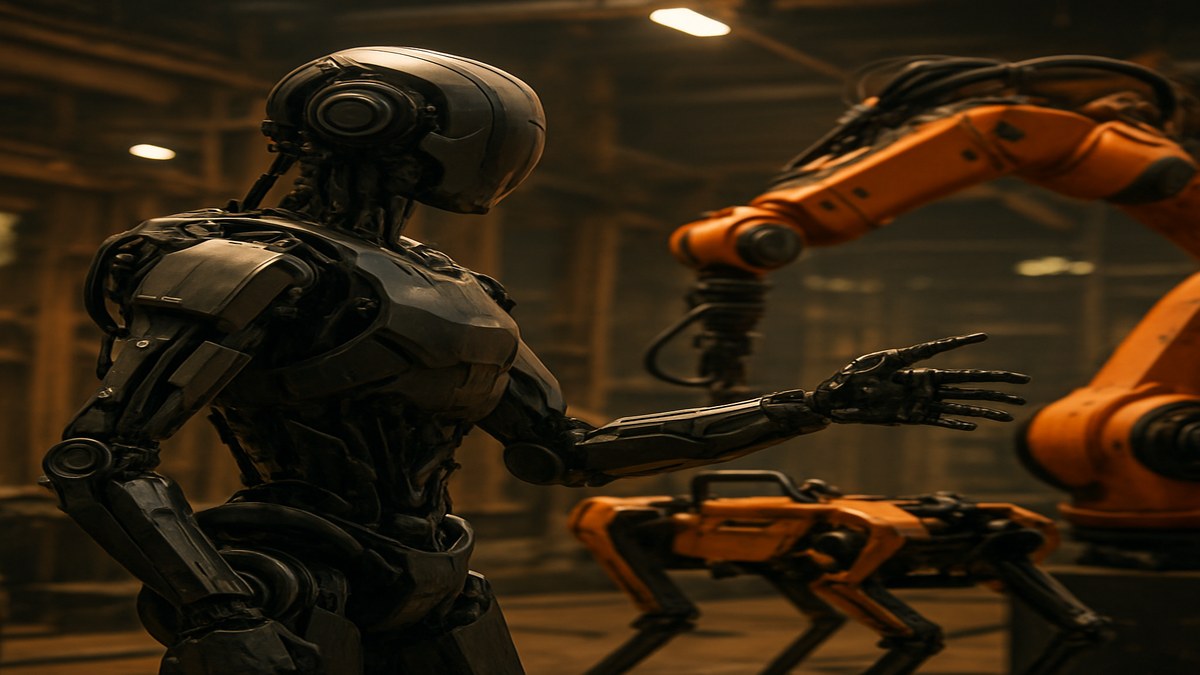
Historically, the deployment of humanoid robots has been hampered by technical limitations, particularly around task adaptability and learning efficiency. Previously, teaching a humanoid robot a new task required extensive programming and custom solutions, often making it an impractical option for many companies. Gemini Robotics aims to solve this problem, allowing robots to learn tasks through simple demonstrations, thus opening the door to more versatile applications in environments where adaptability and quick learning are essential. This development reflects a broader trend within the agent-runtime ecosystem, where the emphasis is increasingly on creating adaptable, intelligent agents that can operate with minimal human intervention.
What Happened
The formalization of the partnership between Boston Dynamics and Google DeepMind was announced at the Consumer Electronics Show (CES) 2026, a fitting venue for unveiling innovations that promise to reshape industries. At the core of this partnership is the integration of DeepMind’s Gemini Robotics into Boston Dynamics’ Atlas humanoid robot, a move that leverages the strengths of both companies in AI and robotics. Gemini Robotics is a foundation model designed by DeepMind to enable robots to learn tasks through demonstration rather than programming. This model is now embedded in the new electric Atlas humanoid, which was unveiled alongside the announcement.
The new Atlas robot represents a significant hardware advancement, featuring a 7.5-foot reach and the ability to lift up to 110 pounds, all powered by a four-hour hot-swappable battery. With 56 degrees of freedom, the Atlas can perform a wide range of tasks with human-like dexterity. The manufacturing of these robots will begin at Hyundai’s Robotics Metaplant, marking the first deployment of this innovative model. The integration allows skills to be replicated fleet-wide within minutes through a central orchestrator, a feature that is set to revolutionize how humanoid robots are deployed in various industries.
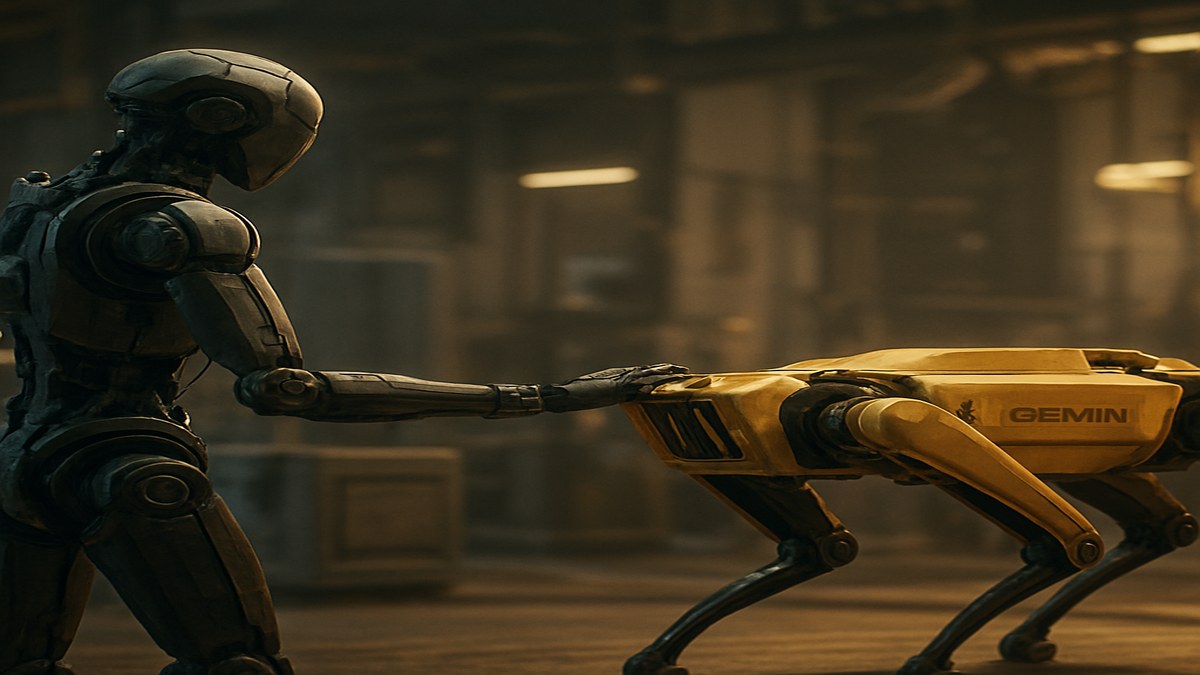
In this partnership, Google DeepMind retains control over the foundation-model layer, which includes updates, safety filters, and the data pipeline, ensuring the AI’s integrity and performance remain at the cutting edge. Meanwhile, Boston Dynamics focuses on the motor control, kinematics, and real-world test harness, leveraging its extensive robotics expertise to ensure the Atlas operates smoothly in dynamic environments. This division of responsibilities mirrors the Android OEM model, where software and hardware are developed by separate entities but work in tandem to deliver a seamless user experience. This collaboration is particularly noteworthy as it marks the first commercially deployed physical-AI stack where a foundation model serves as the runtime, moving beyond theoretical applications into practical, scalable solutions.
Why It Matters
The implications of this partnership extend far beyond the boundaries of Boston Dynamics and Google DeepMind. For the robotics industry, this marks a pivotal moment where AI models transition from being research curiosities to integral components of commercial products. By using a foundation model as the runtime, rather than as a supplementary tool, the industry is witnessing a shift towards more intelligent and adaptable robots. This development could accelerate the adoption of humanoid robots across various sectors, offering improved efficiency and flexibility in tasks that were previously labor-intensive or hazardous.
For industries such as manufacturing, logistics, and healthcare, the ability to deploy a fleet of humanoid robots that can learn new tasks quickly and efficiently is a game-changer. This capability allows businesses to adapt to changing demands without the need for extensive reprogramming or costly downtime. As a result, companies can achieve greater operational efficiency and respond more dynamically to market changes. Additionally, the ability to replicate skills across an entire fleet of robots enhances consistency and quality control, ensuring that tasks are performed to the highest standard.
The broader agent-runtime market is also likely to benefit from this integration. As the first commercially deployed physical-AI stack using a foundation model, the collaboration sets a precedent for future developments in the field. It demonstrates the viability of using AI as a core component of robotic systems, paving the way for further innovations and applications. This partnership also highlights the increasing convergence of AI and robotics, a trend that is expected to continue as technology advances and the demand for intelligent, adaptable systems grows.
How We Approached This
In crafting this article, we prioritized a thorough analysis of the partnership between Boston Dynamics and Google DeepMind, focusing on its implications for the robotics industry and the agent-runtime market. We relied on primary announcements from CES 2026 and analyzed statements from both companies to understand their strategic objectives and technological advancements. Our editorial approach emphasizes the significance of this integration as a turning point in the deployment of humanoid robots.
Agent Runtime, with its local-first AI perspective, seeks to highlight developments that foster innovation and adaptability in intelligent systems. We deliberately focused on the technical aspects of the integration, such as the capabilities of the new Atlas and the role of Gemini Robotics, to provide a comprehensive overview of the partnership’s impact. By doing so, we aim to inform our readers about the potential applications and benefits of this groundbreaking collaboration, while also considering its broader implications for the future of AI and robotics.
Frequently Asked Questions
What is Gemini Robotics?
Gemini Robotics is a foundation model developed by Google DeepMind designed to enable robots to learn and replicate tasks through demonstration. This model allows for quick skill propagation across a fleet of robots, enhancing their adaptability and efficiency in various tasks.
How does Atlas differ from previous humanoid robots?
The new Atlas features significant hardware advancements, including a 7.5-foot reach, the ability to lift 110 pounds, and 56 degrees of freedom. These capabilities, combined with the Gemini Robotics integration, enable Atlas to learn and perform tasks with human-like dexterity across an entire fleet.
What industries could benefit from this technology?
Industries such as manufacturing, logistics, and healthcare stand to benefit significantly from this technology. The ability to quickly deploy humanoid robots that can learn new tasks efficiently offers enhanced operational efficiency, flexibility, and quality control, making it ideal for environments that require adaptability and precision.
As we look ahead, the partnership between Boston Dynamics and Google DeepMind represents a bold step towards a future where humanoid robots are not just tools but collaborative partners in a wide range of industries. This integration of AI into physical systems signifies a new era of innovation, one that promises to enhance the capabilities and applications of humanoid robots. As the first commercially deployed physical-AI stack using a foundation model, this collaboration sets a new standard for the industry, paving the way for further advancements and opportunities. The true impact of this partnership will unfold over the coming years, as industries embrace the potential of intelligent, adaptable robotic systems.