
The announcement of a formalized partnership between Boston Dynamics and Google DeepMind marks a pivotal moment in the field of robotics, as the cutting-edge Gemini Robotics foundation model is integrated directly into the production variant of the Atlas humanoid robot. Unveiled at CES 2026, this new electric Atlas, powered by Hyundai’s Robotics Metaplant, represents both a significant hardware upgrade and a revolutionary approach to AI deployment in physical agents. No longer relegated to research labs, the Gemini model enables a rapid, fleet-wide propagation of skills—allowing operators to demonstrate a task once, with the capability then distributed across all Atlas units almost instantaneously. This breakthrough not only addresses the perennial challenge of teaching humanoid robots new tasks without bespoke engineering but also signifies a major step forward in the field. As this article will explore, these developments have profound implications for the future of robotics, AI integration, and the agent-runtime ecosystem.
Context
In recent years, the landscape of humanoid robotics has been shaped by the quest for greater flexibility and adaptability. Boston Dynamics, renowned for its pioneering work in legged robots, has consistently pushed the envelope with platforms like the SpotMini and the original Atlas. However, the integration of sophisticated AI models directly into robotic systems has remained a formidable challenge. Google DeepMind, a leader in AI research, has been at the forefront of developing foundational models capable of complex, generalized tasks. The partnership between these two titans of technology aims to close the gap between advanced AI and practical robotic applications.
The backdrop for this development is a rapidly evolving robotics industry, where the demand for versatile and autonomous robots is growing across sectors ranging from manufacturing to logistics. As industries increasingly seek automation solutions that can be deployed with minimal customization, the need for robots that can learn and adapt on the fly becomes paramount. The integration of DeepMind’s Gemini Robotics foundation model into Atlas is a direct response to this market demand, promising a system that can learn tasks through demonstration and apply them universally within a fleet.
The timing of this partnership is particularly significant, coinciding with the unveiling of the new Atlas at CES 2026. This event has not only showcased the latest in technological innovation but also positioned the Atlas as a flagship model for humanoid robotics, with capabilities that promise to redefine industry standards. As the first deployment takes place at Hyundai’s Robotics Metaplant, the stage is set for a transformative era in which robotics and AI converge more seamlessly than ever before.
What Happened
At the heart of this revolutionary development is the integration of Google DeepMind’s Gemini Robotics foundation model into Boston Dynamics’ latest iteration of the Atlas humanoid robot. Announced at CES 2026, this partnership reflects a meticulous convergence of AI intelligence and robotic hardware prowess. With 56 degrees of freedom, the new Atlas boasts a 7.5-foot reach and an ability to lift 110 pounds, all the while operating on a 4-hour hot-swappable battery, allowing for extended operational periods without downtime.
The Gemini Robotics model serves as the cognitive engine driving the Atlas, enabling it to learn new tasks with remarkable efficiency. Instead of requiring custom programming for each task, operators can now demonstrate a single instance of a task—such as loading a tray or sequencing parts—and within minutes, this skill is disseminated across all Atlas units through a centralized orchestrator managed by Boston Dynamics. This capability dramatically reduces deployment times and increases operational versatility, making the Atlas a potent tool in environments that demand rapid adaptability.
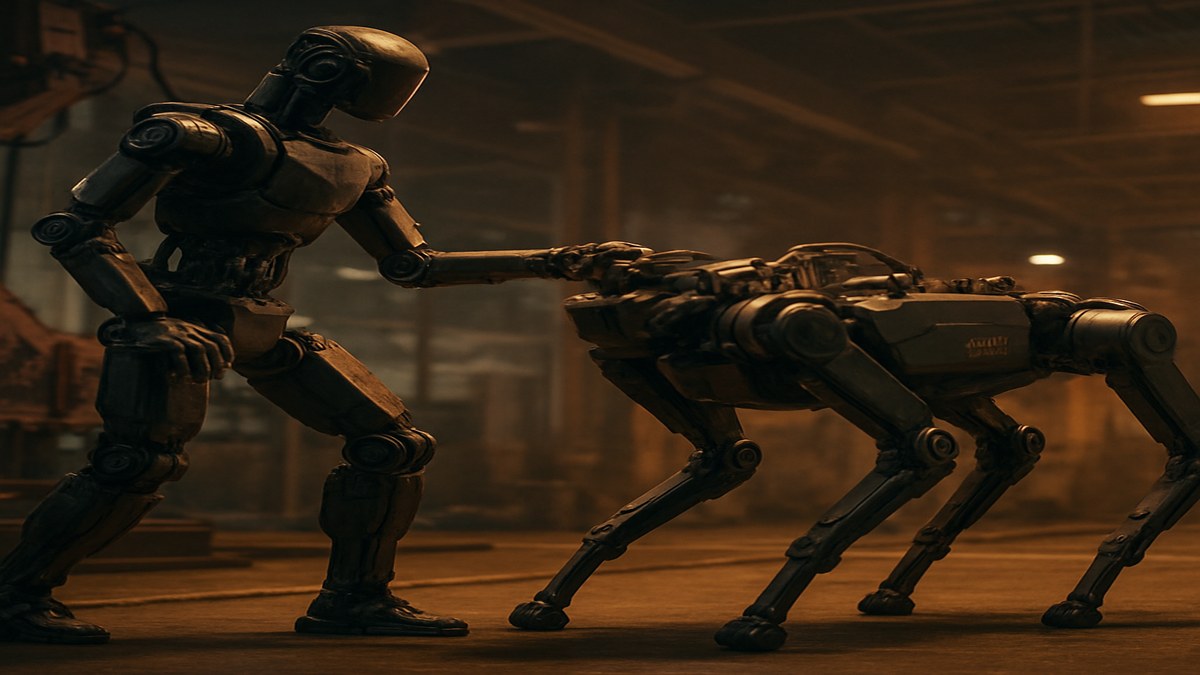
In terms of operational oversight, Google DeepMind maintains control over the foundation-model layer, encompassing updates, safety protocols, and data pipeline management. Meanwhile, Boston Dynamics retains ownership over the motor control, kinematics, and the real-world test harness, ensuring that the physical capabilities of the Atlas are matched by robust, real-world performance. This arrangement mirrors the successful Android OEM model, where hardware manufacturers deliver devices powered by Google’s software intelligence, illustrating a harmonious synergy between software and hardware in robotics.
Why It Matters
This integration is more than just a technological feat; it signifies a paradigm shift in how robots are deployed and utilized across industries. For manufacturers, the ability to quickly reprogram robots with new skills without extensive downtime or engineering effort translates into significant cost savings and increased productivity. In sectors like logistics and manufacturing, where flexibility and speed are paramount, the new Atlas could become an indispensable asset, capable of performing a diverse array of tasks with minimal human intervention.
For the agent-runtime market, the deployment of a physical-AI stack where a foundation model like Gemini serves as the runtime environment is groundbreaking. Traditionally, such models have been confined to research settings, but their commercial deployment heralds a new era of intelligent, adaptable robotics. This approach could pave the way for more generalized AI applications in robotics, moving beyond task-specific programming to a more holistic model where robots can autonomously adapt to new challenges.
Additionally, the implications for AI safety and regulation are profound. With DeepMind managing the AI layer, there is an inherent safety net of updates and filters that can be rolled out fleet-wide, ensuring consistent compliance with emerging standards and regulations. This centralized control mechanism provides an added layer of security and reliability, which is crucial as robots become more integrated into everyday industrial operations. As AI and robotics continue to evolve, maintaining a balance between innovation and safety will be essential in gaining public trust and regulatory approval.
How We Approached This
In crafting this article, we focused on providing a comprehensive overview of the partnership’s implications within the robotics and AI industries, drawing from a variety of reputable sources and industry reports. Our editorial approach centers on highlighting the agent-centric paradigm shift brought about by the integration of foundational AI models into physical robots. By prioritizing insights from key stakeholders and industry experts, we aimed to offer a nuanced perspective on how this development could reshape operational norms and expectations.
We chose to emphasize the practical applications and potential industry disruptions over the technical minutiae, aligning with our publication’s commitment to delivering actionable insights for practitioners and decision-makers. By focusing on the broader implications for the agent-runtime ecosystem, our goal was to provide readers with a clear understanding of how such advances in robotics could influence their respective fields and the future of AI-driven automation.
Frequently Asked Questions
What is the significance of Gemini Robotics in the Atlas robot?
The Gemini Robotics foundation model embedded in the Atlas robot allows for rapid skill acquisition and deployment. Operators can demonstrate a task once, and the skill propagates across all Atlas units, enabling widespread and efficient task execution without the need for extensive custom programming. This is a game-changer for industries requiring adaptable and intelligent robotic solutions.
How does the partnership between Boston Dynamics and Google DeepMind work?
Boston Dynamics and Google DeepMind have formed a partnership where DeepMind provides the AI intelligence, while Boston Dynamics focuses on the robotic hardware. DeepMind manages the foundation-model layer, including updates and data pipelines, ensuring the AI remains state-of-the-art and secure. Meanwhile, Boston Dynamics oversees the physical aspects, such as motor control and real-world testing, creating a robust and efficient humanoid robot.
What are the potential impacts on the robotics industry?
The integration of the Gemini Robotics model into Atlas represents a significant advancement in the robotics industry. It reduces the time and cost associated with deploying robots for new tasks, making automation more accessible and efficient. This development could lead to broader adoption of humanoid robots in various sectors, enhancing productivity and operational flexibility while setting new standards for AI-driven automation.
As robotics and AI technologies continue to converge, the Boston Dynamics and Google DeepMind partnership is poised to redefine the landscape of humanoid robotics. With the Gemini Robotics model powering the new Atlas, the possibilities for rapid skill deployment and adaptation are vast and varied. As industries increasingly demand automated solutions that offer both flexibility and efficiency, the Atlas stands out as a beacon of innovation, promising to transform industrial operations and redefine what is possible with AI-driven robotics. This development not only highlights the potential of foundation models in the agent-runtime ecosystem but also sets the stage for future collaborations that could further accelerate advancements in this dynamic field.