In a groundbreaking advancement that signifies a pivotal shift in embodied-agent technology, Figure AI’s Figure 03 humanoid, powered by the Helix 02 model, has reached continuous unsupervised operation status at BMW’s Spartanburg plant. This achievement, hailed as a milestone for agent-based manufacturing, coincides with Figure AI’s latest funding round, which has valued the company at an impressive $39 billion. Over the past several weeks, Figure 03 has been diligently working in multi-shift production roles without human handlers, logging over 1,250 hours of activity and moving more than 90,000 parts across 30,000 vehicles. This feat not only underscores the capabilities of modern agent systems but also challenges the traditional paradigms of factory labor. At the heart of this innovation is Helix 02, an integrated vision-language-action model that seamlessly combines video, language, and motor-control signals to enable full-body coordinated movements in response to natural language instructions and visual cues. This article delves into the implications of these advancements for the agent runtime ecosystem, exploring the potential for widespread adoption across manufacturing sectors and the shift from human-in-the-loop operations to fully autonomous agent systems.
Context
The journey to achieving full-body autonomy in robotic agents has been long and complex, with researchers and engineers striving for decades to bridge the gap between limited functionality and fully autonomous operation. Early humanoid robots were constrained by the division between upper-body and lower-body movements, requiring separate control systems that lacked the fluidity and coordination needed for practical applications. Over time, the development of integrated models like Helix 02 has allowed for a more holistic approach to robotic motion, enabling agents to perform tasks with the same dexterity and precision as human workers.
Figure AI, a leader in the field of embodied-agent research, has been at the forefront of these advancements, continuously refining their models to push the boundaries of what is possible. With the introduction of Figure 03 and Helix 02, the company has reached a turning point, demonstrating that continuous unsupervised operation is not only feasible but also economically viable. This breakthrough comes at a time when industries are increasingly looking for ways to mitigate labor shortages and reduce operational costs, making the adoption of autonomous agents more attractive than ever.
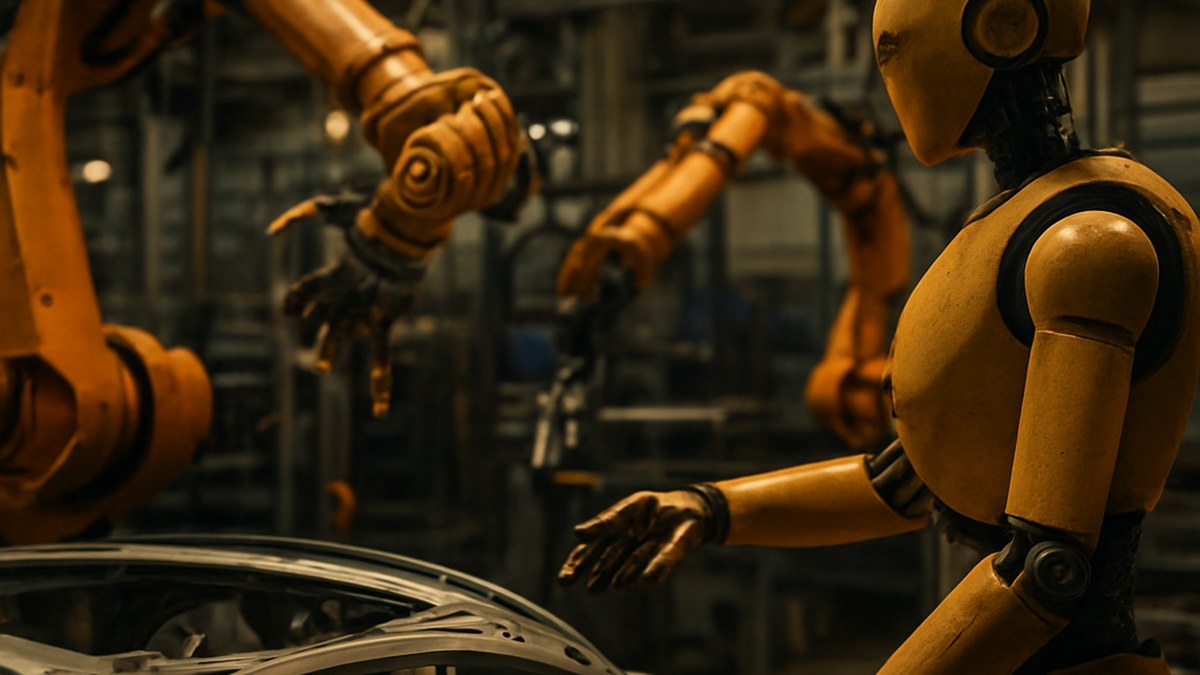
The decision to implement Figure 03 and Helix 02 at BMW’s Spartanburg plant is strategic, given the facility’s reputation for innovation and efficiency. As one of the largest automotive manufacturing plants in the United States, Spartanburg serves as an ideal testing ground for cutting-edge technologies. The successful deployment of these agents in such a high-profile setting not only highlights the robustness of their capabilities but also sets a precedent for other manufacturers to follow suit in exploring the potential of full-body autonomous systems.
What Happened
Over the last month, Figure 03, partnered with the Helix 02 model, has operated in a continuous unsupervised state at BMW’s Spartanburg facility, a site known for its rigorous production standards and high throughput. During this period, the humanoid agents have been tasked with various roles traditionally handled by human workers, including part assembly, quality inspection, and logistical management. The achievement of over 1,250 hours of unsupervised operation, with 90,000 parts moved across 30,000 vehicles, marks a significant leap forward in the practical application of agent-based technologies in manufacturing environments.
Helix 02 plays a crucial role in this success, utilizing its sophisticated vision-language-action model to interpret complex instructions and environmental cues. This model, trained end-to-end on vast datasets encompassing video, language, and motor control signals, enables Figure 03 to execute tasks with remarkable precision and adaptability. The ability to integrate foot placement, balance, and arm trajectory into a single coherent model differentiates Helix 02 from its predecessors, proving the viability of full-body autonomy in real-world settings.
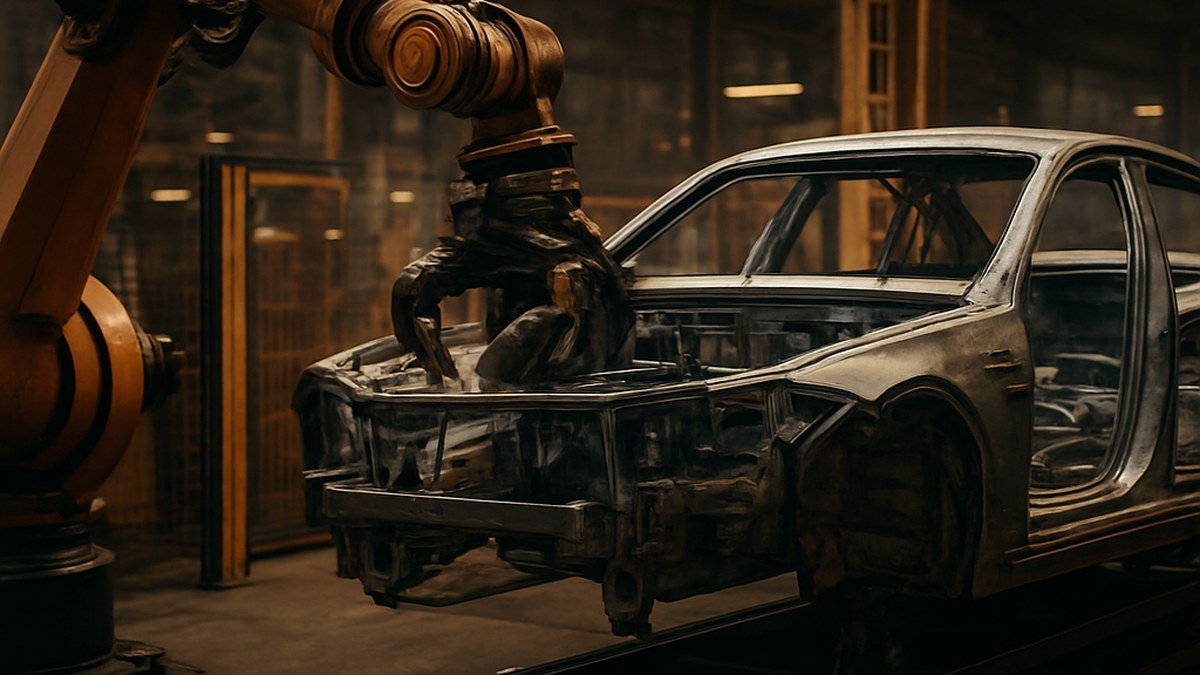
The financial implications of this advancement are profound, as evidenced by Figure AI’s recent $39 billion valuation in its latest funding round. Investors and industry leaders alike recognize the potential of fully autonomous agents to transform manufacturing processes, reducing labor costs and increasing operational efficiency. The successful deployment at BMW Spartanburg serves as a proof of concept that could spur further investments and collaborations, paving the way for broader adoption of agent technologies across various sectors.
Why It Matters
The implications of achieving continuous unsupervised operation with Figure 03 and Helix 02 extend far beyond the confines of BMW’s Spartanburg plant. This technological breakthrough represents a tipping point in the evolution of agent-based systems, signaling a shift from experimental deployments to mainstream industrial applications. As industries grapple with labor shortages and rising costs, the adoption of fully autonomous agents offers a compelling solution that promises to enhance productivity and maintain competitive advantage.
From an economic perspective, the integration of such agents into manufacturing processes could significantly reduce labor expenses, allowing companies to allocate resources more efficiently and invest in innovation. Moreover, the ability to operate without human oversight reduces the risk of production delays and human error, ensuring a more consistent and reliable output. This has the potential to revolutionize not only the automotive industry but also other sectors reliant on labor-intensive processes, such as electronics, textiles, and logistics.
Furthermore, the success of Figure 03 and Helix 02 underscores the broader applicability of the underlying technologies across the agent runtime ecosystem. The same principles that govern the integration of vision, language, and motor control in physical-world actions can be applied to enhance the capabilities of chat-based and virtual agents, opening up new avenues for innovation and collaboration. As the line between digital and physical agents continues to blur, the prospects for creating seamless, fully-integrated systems become increasingly attainable.
How We Approached This
At Agent Runtime, our editorial approach to covering this story was grounded in a rigorous analysis of the developments at BMW Spartanburg and their implications for the agent runtime ecosystem. We reviewed detailed reports and data logs from Figure AI, cross-referencing these with insights from industry experts and academic sources to provide a comprehensive overview of the advancements achieved by Figure 03 and Helix 02. Our focus was on highlighting the technical innovations that underpin these achievements and exploring their broader significance for the future of autonomous agents in manufacturing.
In crafting this article, we emphasized the strategic importance of the Spartanburg deployment as a benchmark for future applications and investments in embodied-agent technologies. We sought to provide readers with a clear understanding of how Figure AI’s advancements fit within the larger context of agent-based research and innovation, ensuring that the story was not only informative but also forward-thinking. By concentrating on concrete data and expert perspectives, we aimed to deliver a nuanced narrative that reflects the complexity and potential of these groundbreaking developments.
Frequently Asked Questions
What makes Figure 03 and Helix 02 different from previous robotic systems?
Figure 03 and Helix 02 distinguish themselves by achieving full-body autonomy through a unified vision-language-action model. Unlike earlier robots that operated with separate systems for upper-body and lower-body movements, Helix 02 integrates these components, allowing for seamless coordination and fluid motion. This innovation enables the robots to execute complex tasks without human intervention, marking a significant advancement in robotic capabilities.
How does the deployment at BMW Spartanburg impact the automotive industry?
The deployment of Figure 03 and Helix 02 at BMW Spartanburg represents a pioneering move in the automotive industry, showcasing the potential of autonomous agents to enhance production efficiency and reduce labor costs. By demonstrating the viability of continuous unsupervised operation, this deployment sets a precedent for other manufacturers to explore similar technologies, potentially leading to widespread adoption and transformation across the sector.
What are the potential future applications of Helix 02’s technology?
Helix 02’s integrated vision-language-action model has broad applicability beyond manufacturing. Its ability to process natural language instructions and visual cues for coordinated physical actions could be leveraged in areas such as healthcare, logistics, and service industries. The technology’s adaptability and precision make it suitable for tasks that require a high degree of automation and reliability, offering new possibilities for innovation and efficiency across various fields.
As Figure AI continues to refine its technologies and expand the deployment of Figure 03 and Helix 02, the implications for the manufacturing landscape are profound. The shift towards fully autonomous operations not only promises significant economic benefits but also positions agent-based systems as a cornerstone of modern industrial processes. Looking ahead, the focus will be on scaling these deployments and integrating them into diverse applications, ensuring that humanoid robots become a reliable and integral component of factory operations. As the timeline for widespread adoption accelerates, the impact on productivity and innovation across industries is likely to be transformative.